APOD on Nostr: **Astronomy Picture of the Day** 19 December 2025 **Long Shadows of the Montes ...
**Astronomy Picture of the Day**
19 December 2025
**Long Shadows of the Montes Caucasus**
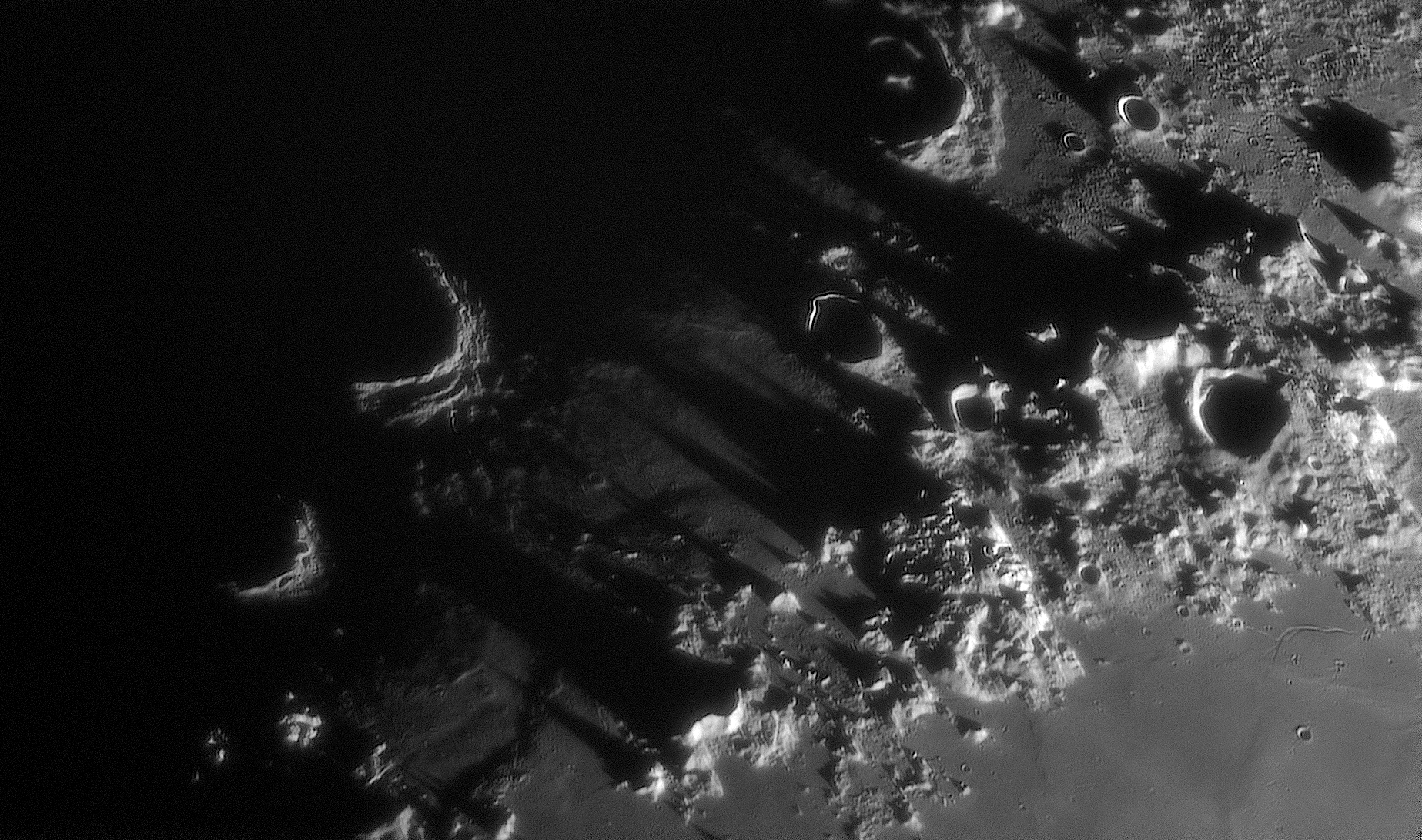
Image Credit & Copyright: When the Moon
When the Moon is at its first quarter phase, the Sun rises along the Montes Caucasus as seen from the lunar surface. The lunar mountain range casts the magnificent, spire-like shadows in this telescopic view from planet Earth, looking along the lunar terminator or the boundary between lunar night and day. Named for Earth's own Caucasus Mountains, the rugged lunar Montes Caucasus peaks, up to 6 kilometers high, are located between the smooth Mare Imbrium to the west and Mare Serenitatis to the east. Still mostly in shadow in this first quarter lunarscape, at the left (west) impact craters reflect the light of the rising Sun along their outer, eastern crater walls.
#APOD #Astrophysics #Astrospace #Planetarium #Astrobiology
https://apod.nasa.gov/apod/ap251219.htmlPublished at
2025-12-19 05:06:51 UTCEvent JSON
{
"id": "5f00e7a29d600c9f53824d760ad5fa4dbfb2bd339bf0aab217bb0d60a3478de6",
"pubkey": "e85ed75286cb77475776c1007df8c4ff1c9c68eff91c3627347b065c5bf4dc78",
"created_at": 1766120811,
"kind": 1,
"tags": [],
"content": "**Astronomy Picture of the Day**\n\n19 December 2025\n\n**Long Shadows of the Montes Caucasus**\n\nhttps://apod.nasa.gov/apod/image/2512/MontesCaucasusCopie.png\n\nImage Credit \u0026 Copyright: When the Moon\n\nWhen the Moon is at its first quarter phase, the Sun rises along the Montes Caucasus as seen from the lunar surface. The lunar mountain range casts the magnificent, spire-like shadows in this telescopic view from planet Earth, looking along the lunar terminator or the boundary between lunar night and day. Named for Earth's own Caucasus Mountains, the rugged lunar Montes Caucasus peaks, up to 6 kilometers high, are located between the smooth Mare Imbrium to the west and Mare Serenitatis to the east. Still mostly in shadow in this first quarter lunarscape, at the left (west) impact craters reflect the light of the rising Sun along their outer, eastern crater walls.\n\n#APOD #Astrophysics #Astrospace #Planetarium #Astrobiology\n\nhttps://apod.nasa.gov/apod/ap251219.html\n",
"sig": "105f1ae3cd6542c632bf147576b5cb24341ade10bf8f39efd6dc978e1f5305bc6033cdb7e4a3f556eabc8f3bda79ac7965f01b43845db94a0779c0e1e88e7b7f"
}
