Greg Egan on Nostr: It’s well known that in special relativity, observers in relative motion can ...
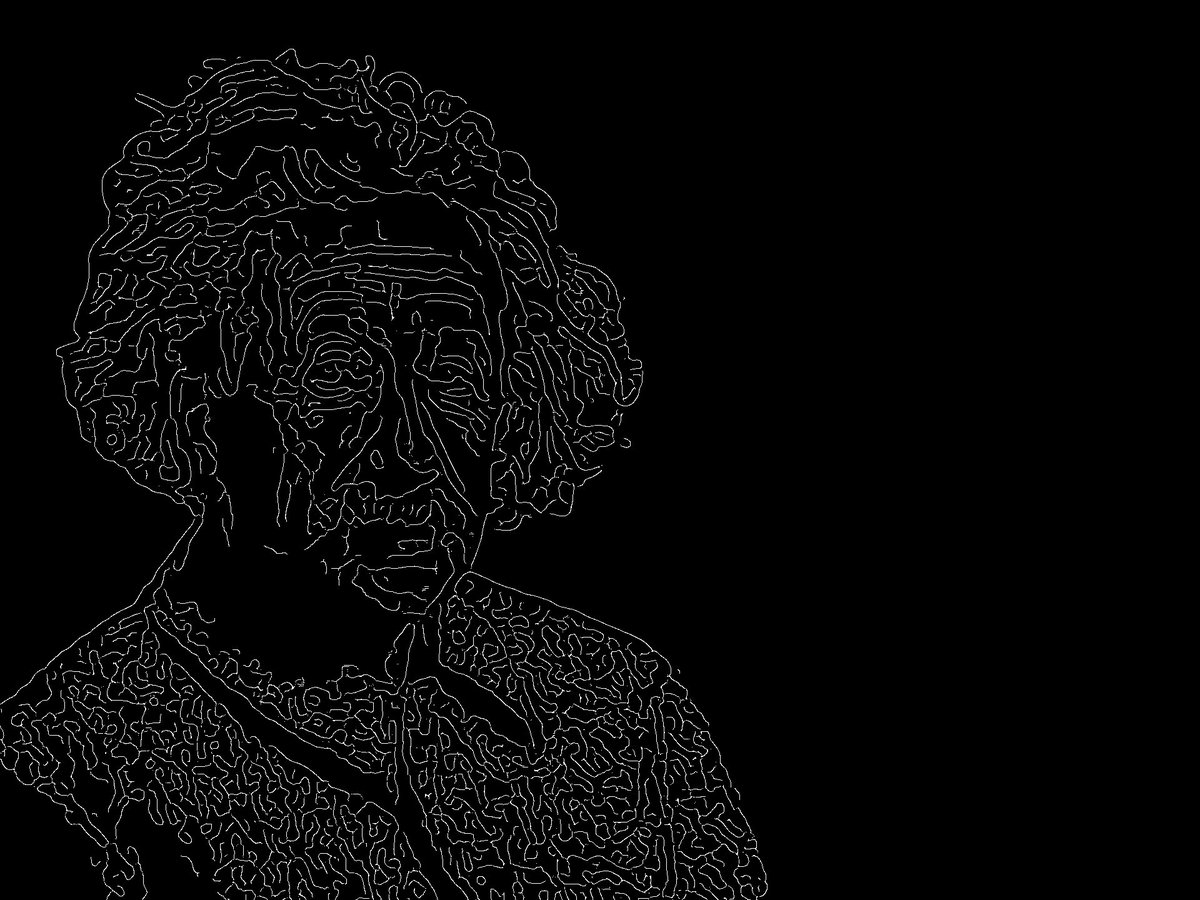
It’s well known that in special relativity, observers in relative motion can disagree about the shapes and sizes of various objects. But if Alice draws any planar figure, and fires a simultaneous pulse of light from each point on it, perpendicular to the plane, any observer will agree on the figure’s shape and size.
What? Simultaneity is an observer-dependent notion! But if Alice uses *her* definition of simultaneity, she will encode her chosen planar figure in the collection of light pulses in a frame-invariant way.
What happens if Bob, flying past in a spaceship, uses *his* definition of simultaneity to pick out different events on the worldlines of the same light pulses?
Suppose A is a unit-length spacelike vector orthogonal to Alice's worldline, and C is a lightlike vector orthogonal to A. Then the worldlines for two light pulses that Alice considers to be separated by a distance x, one starting at the origin and one starting at x A, will be:
P(s) = s C
Q(u) = x A + u C
where s, u are parameters for how far we go along the respective worldlines.
At s = u = 0 we have what Alice measures:
P(0) = 0
Q(0) = x A
|Q(0)-P(0)|^2
= |x A|^2
= x^2 |A|^2
= x^2
But for *any* s, u:
|Q(u)-P(s)|^2
= |x A + (u-s) C|^2
= x^2 |A|^2 + 2(u-s) A·C + (u-s)^2 |C|^2
= x^2
So whatever events on those two worldlines Bob considers to be simultaneous, he still ends up measuring exactly the same distance between them as Alice does.
Published at
2026-02-05 05:40:22 UTCEvent JSON
{
"id": "88d4eb406cd167e93f12b636b4691fda10d9bbc014099f7fb53fb676c98a239e",
"pubkey": "563821004c3e4e4f4fbef74a2657db3299a0e71a78214bf97db0b6ca05fb73d3",
"created_at": 1770270022,
"kind": 1,
"tags": [
[
"proxy",
"https://mathstodon.xyz/@gregeganSF/116016416211192978",
"web"
],
[
"imeta",
"url https://media.mathstodon.xyz/media_attachments/files/116/016/405/501/533/892/original/797318c1a0d683e1.png",
"m image/png"
],
[
"proxy",
"https://mathstodon.xyz/users/gregeganSF/statuses/116016416211192978",
"activitypub"
],
[
"L",
"pink.momostr"
],
[
"l",
"pink.momostr.activitypub:https://mathstodon.xyz/users/gregeganSF/statuses/116016416211192978",
"pink.momostr"
],
[
"-"
]
],
"content": "It’s well known that in special relativity, observers in relative motion can disagree about the shapes and sizes of various objects. But if Alice draws any planar figure, and fires a simultaneous pulse of light from each point on it, perpendicular to the plane, any observer will agree on the figure’s shape and size.\n\nWhat? Simultaneity is an observer-dependent notion! But if Alice uses *her* definition of simultaneity, she will encode her chosen planar figure in the collection of light pulses in a frame-invariant way.\n\nWhat happens if Bob, flying past in a spaceship, uses *his* definition of simultaneity to pick out different events on the worldlines of the same light pulses?\n\nSuppose A is a unit-length spacelike vector orthogonal to Alice's worldline, and C is a lightlike vector orthogonal to A. Then the worldlines for two light pulses that Alice considers to be separated by a distance x, one starting at the origin and one starting at x A, will be:\n\nP(s) = s C\nQ(u) = x A + u C\n\nwhere s, u are parameters for how far we go along the respective worldlines.\n\nAt s = u = 0 we have what Alice measures:\n\nP(0) = 0\nQ(0) = x A\n\n|Q(0)-P(0)|^2\n= |x A|^2\n= x^2 |A|^2\n= x^2\n\nBut for *any* s, u:\n\n|Q(u)-P(s)|^2\n= |x A + (u-s) C|^2\n= x^2 |A|^2 + 2(u-s) A·C + (u-s)^2 |C|^2\n= x^2\n\nSo whatever events on those two worldlines Bob considers to be simultaneous, he still ends up measuring exactly the same distance between them as Alice does.\nhttps://media.mathstodon.xyz/media_attachments/files/116/016/405/501/533/892/original/797318c1a0d683e1.png\n",
"sig": "fc0aaa94ead7f5949da3dcbef69ae51fff757803038ee5ac0745ea8fcc20dfd8fbe32cdc365940307f97da421a1587af97505c6a6a3d49c0d17907ab0e951947"
}