
I did mention that "right now, after just 2 months of taking data, they've just measured m₂² - m₁² more accurately than ever before". So that answers your question to some extent. We know m₂² - m₁² is positive, so unless neutrino masses can be negative (which they can't, really) this means we know
m₁ < m₂
JUNO says
m₂² - m₁² = (7.50 ± 0.12) × 10⁻⁵ eV²
assuming the normal ordering, and something close even otherwise.
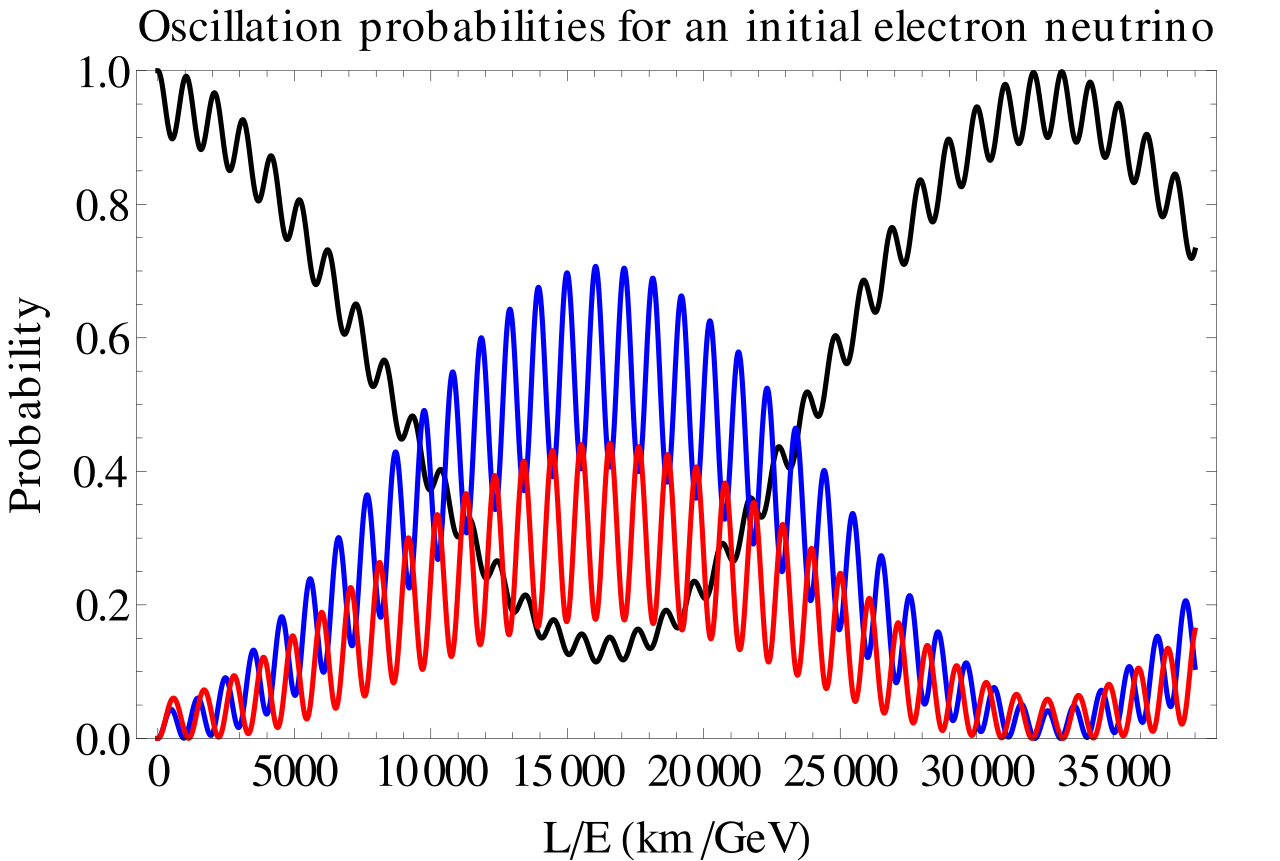
It's quite complicated, and I don't understand it all, and I won't try to say most of what I know, but the basic idea is this: nuclear reactors produce electron antineutrinos, but by the time they reach JUNO some have oscillated into other flavors, and we can use use that to estimate m₂² - m₁², which is small, producing rather slow oscillations between electron antineutrinos and other flavors. The ultimate goal of JUNO is to detect the rapid oscillations due to bigger mass-squared differences.
Below is a rough chart showing an estimate of the probability for electron antineutrinos (black) to become mu (blue) or tau (red) antineutrinos. The probability depends on the distance of travel but also the energy - which is great, because it helps you learn about oscillations even though you can't change the distance between JUNO and the nuclear reactors!