#cannabis #420
Some people say that recreational drug use is depoliticizing, and depoliticized is what our rulers want us to be. This is a bogus analysis.
To generalize about drugs is a mistake. Every drug is different. Each has different effects. In many cases the difference is profound. Each person experiences those effects in their own way. Some are dramatically depoliticizing, others not so much, others still are quite the opposite. I know more about cannabis than I do about most drugs, so I'm going to talk about that.
I've consumed cannabis products most days of the week for my entire adult life. Not only did it not deradicalize me but, like many people, I found the laws about it to be themselves radicalizing. Cannabis brings together people of different cultures who wouldn't otherwise meet each other or imagine that they had anything in common. It's a unifying force. I find it very encouraging that Snoop Dog and Willie Nelson unite in public to campaign against cannabis prohibition. It's a good sign. Anyone anywhere, campaigning in any way possible, against any prohibition whatsoever that was imposed by the state, is a good thing. Cross cultural intersectionality is a force multiplier. All prohibitions are variations on the same theme. The War On (some) Drugs, abortion, vaccines, porn, transrights, consent, and sexwork are all the same issue: Who owns your body, you or the state?
The public's attitude about cannabis is evolving. The propaganda is wearing off. It's been a gradual process. As with all such processes, it is best understood if we look at its history. So I want to share a story with you about something that happened one long hot summer long ago. In the late 60s I lived in NYC's Lower East Side. It was built to be a slum. It stayed that way for a very long time. Originally it was a Jewish majority neighborhood. By the time I got there most Jews had moved uptown, to the outer boroughs, or to Long Island. The neighborhood was mostly hippies and Puerto Ricans, except for 6th Street between 1st Avenue and Avenue A, which was overwhelmingly Ukrainian and very right-wing.
I was a member of an anarchist group of sorts that was based in the Lower East Side. We called ourselves New York Provo, after the Dutch Provos whose chutzpah and ingenuity we greatly admired. We were best seen as a sort of politicized street gang. One guy in the group was a political theoretician named Dana Beal. He later went on to become the brains behind Yippie! Abbie Hoffman and Jerry Rubin were front men, but Dana was the brains.
Dana was the closest thing New York Provo had for a leader. Our meetings were pretty much horizontal. Dana's main role was being our best weed connection. We sold weed to finance our activities. Our main enemy, the US intelligence apparatus was selling heroin and cocaine to finance theirs. We considered ourselves their moral superiors. We were very much opposed to heroin and cocaine. We called them "death drugs" and preached against them. At one point we distributed for free a very limited supply of Ibogaine, an herbal treatment for heroin addiction. We sold weed for money. Then one day, we gave it away for free. This is the story of what happened on that day.
The money we made selling weed we used to pay rent on our office on Avenue A, across from Tompkins Square and on our free store on 1st St, between 1st and 2nd Avenue. We also gave away food and published a daily broadside about stuff happening in the neighborhood.
The back door of the free store led to a tiny yard and chainlink fence. There was a hole in the fence. Directly across East Houston St was Yonah Schimmel's Knish Bakery. We were walking distance from Katz's Delicatessen. Most Jewish residents had moved out of the neighborhood but some businesses remained. A decent nosh was never hard to find.
On November 14, 1967, the Secretary of State Dean Rusk was scheduled to speak in midtown Manhattan. NY Provo staged the first of what came to be called "breakaway marches" in protest. As we had planned, it turned violent immediately.
One night, three weeks later, the cops raided our free store and busted 31 people including many NY Provos and some people just "shopping" for clothes. Dana ran out the back door, dove through the hole in the fence, and escaped down Eldridge St. The first cop to chase him was too fat to fit through the hole and got stuck. He had to be extricated by other cops. This became a local legend.
Earlier that year, Abbie Hoffman had showed up in town and opened his own free store on 10th St. Abbie was always expropriating other people's ideas and labor. He even stole the manuscript for his famous *Steal This Book* from Emmett Grogan. Then he stole the free store idea from us. We didn't hold this against Abbie. We had in fact been discussing plans for "two, three, many" free stores. I personally printed on our Gestetner Abbie's first leaflet in NYC advertising it. The Gestetner was located in our office across from Tompkins Square. At first I had no idea how a Gestetner, or any mimeograph worked. But I did have the manual. With the right tools and manual, anyone can fix anything, as long as they follow directions.
Provos hung out in Tompkins Square. The whole neighborhood did. One day a fight broke out in the park between some Puerto Ricans and some hippies. It wasn't about their ethnicity. It was personal, between individuals. NY Provos knew some of these guys personally. We had a little talk about it with some of them. Eventually all agreed it that was not worth destroying the vibes in the neighborhood over a petty personality clash. We decided to nip this thing in the bud before it had a chance to get out of hand and spoil the summer for all of us.
NY Provo was part Anglo and part Latin. We were all young. It was a unifying factor. Even though I wasn't Latino, I wasn't a hippie, either. To this very day not all white potheads are hippies. I was more of a greaser. I wore a white T-shirt with a pack of Marlboros rolled up in my left sleeve. I combed my hair like James Dean. My fingernails were usually dirty from wrenching on motors and maintaining the ancient Gestetner. A hippie I wasn't. But I did smoke pot and I do like Latin music.
This made me an ideal cross cultural liaison between communities. Everybody in the neighborhood liked me except the 6th Street Ukrainians. They were very conservative and saw me as some kind of commie. I tried to explain the difference, but they didn't want to hear it.
FWIW, there's an excellent book on the role of politically active greasers in Chicago that you should really check out. It's called *Hillbilly Nationalists, Urban Race Rebels, and Black Power: Community Organizing in Radical Times*, by Amy Sonnie, James Tracy, with a foreword by Roxanne Dunbar-Ortiz.
https://www.goodreads.com/en/book/show/11036817-hillbilly-nationalists-urban-race-rebels-and-black-power
I met a couple of the people in this book when they came to New York to scope out the scene, and later when they came to New Haven to help occupy Yale Law School to protest the railroading of Bobbie Seale. They were good people.
NY Provo brainstormed ways to stitch the Tompkins Square denizen communities back together. Ethnic conflict was the very last thing the neighborhood needed. We finally concluded that since two things that both groups liked was music and marijuana, we would throw a pot party in the park. We rented the bandshell ($15 for the afternoon) and recruited six local bands, three Latin and three rock.
The night before a few Provos got high on acid, stayed up all night, and rolled up a pound and a half of joints. We stuffed them into a couple conga drums. One of the more Latin looking Provos had dressed up in the latest Puerto Rican fashion. He strolled into the park with the drums. There were cops all around but they didn't think twice about it, or really even notice. Puerto Ricans often played drums in the park. It was normal.
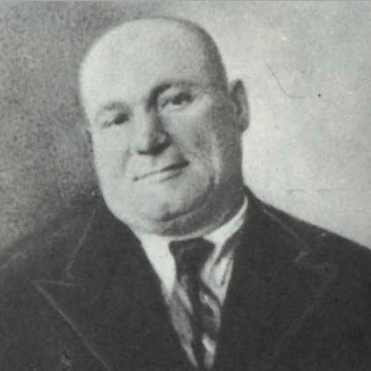
His name was Carlos Ramirez. Everybody called him "Puerto Rican Charlie". It was his preferred moniker.
Dana had heard about him through neighborhood gossip and sent me to recruit him.
"Charlie?" I asked when we met.
"Puerto Rican Charlie," he answered, and stuck a joint in my mouth. We agreed that there were a lot of Charlies in New York, but he was unique. We hit it off immediately. He was a fluently bilingual and totally bicultural Manhattan native. At 18 he had joined the army. He'd been promised an education. Instead he spent four years guarding an airbase in Germany. As he was being discharged he was approached by a recruiting officer who told him he'd been scammed by a crooked recruiting officer who had since been thrown out of the army. If Charlie would just "sign here" the second recruiting officer promised him a real education this time. Instead he was sent back to Germany to guard a different airbase for four years. By then he hated the government with a deep and abiding passion. He began reading about alternatives. He didn't find Marxism appealing because it entailed what they called "party discipline," which amounted to people telling him what to do. Charlie hated being told what to do. The army had taught him that. When he learned about anarchism he'd found his political home.
At 31 that year, Charlie was the oldest Provo. He usually dressed like a beatnik, with a beret, sunglasses, a sweatshirt, goatee, and sneakers. For this caper he dressed totally Latin and totally blend in stylish. I followed him into the crowd. When we were surrounded and out of sight of the cops, I reached into the drum on his shoulder, pulled out two sacks of joints, and we handed them out. It was a very popular move. It was also the first smoke-in we'd ever even heard of. A splendid time was had by all. There was no more neighborhood in-fighting in the park that summer. There was a bit of a dust up with the cops a month later but that's a quite different sort of event, and a story for another day.
(cont.)