APOD on Nostr: **Astronomy Picture of the Day** 10 August 2026 **Three Galaxy Pairs** Image: Credit: ...
**Astronomy Picture of the Day**
10 August 2026
**Three Galaxy Pairs**
Image:
Credit: Not provided
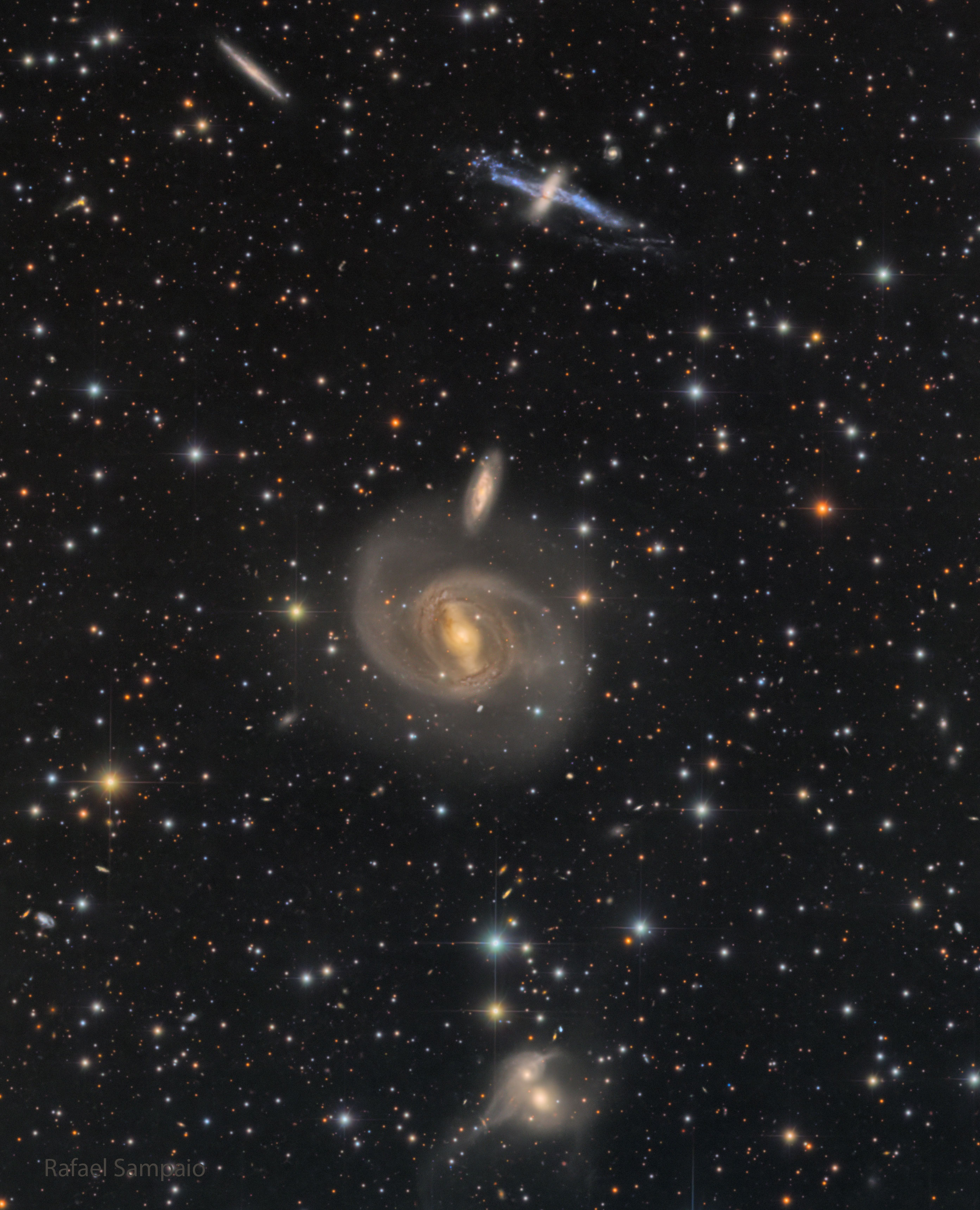
Each of these pairs of galaxies is different. The two galaxies at the top are likely not interacting , at least presently. However, the top galaxy with the blue stripe, NGC 4650A , is a polar ring galaxy and may be the result of a past galaxy collision . The two galaxies in the middle of the featured image appear like they could be interacting gravitationally -- but their relative speeds make this unlikely. Of these two, the larger galaxy, NGC 4650 , is a spiral galaxy with a bright bar of stars across its center. The two galaxies at the bottom are actively interacting . Possibly in a billion years or so, NGC 4622A and NGC 4622B will merge and become one single galaxy. All of these galaxies are likely members of the larger Centaurus Galaxy Cluster .
#APOD #Space #Astronomy #NASAInspires #lookUp
https://apod.nasa.gov/apod/ap260810.htmlPublished at
2026-08-10 04:05:25 UTCEvent JSON
{
"id": "3f8a0a373d8badaf3d287b5f1ecb575e3b80ec29a841a1fc91f769896f821a98",
"pubkey": "e85ed75286cb77475776c1007df8c4ff1c9c68eff91c3627347b065c5bf4dc78",
"created_at": 1786334725,
"kind": 1,
"tags": [],
"content": "**Astronomy Picture of the Day**\n\n10 August 2026\n\n**Three Galaxy Pairs**\n\nImage: https://apod.nasa.gov/apod/image/2608/Three3GalaxyPairs_Sampaio_2784.jpg\n\nCredit: Not provided\n\nEach of these pairs of galaxies is different. The two galaxies at the top are likely not interacting , at least presently. However, the top galaxy with the blue stripe, NGC 4650A , is a polar ring galaxy and may be the result of a past galaxy collision . The two galaxies in the middle of the featured image appear like they could be interacting gravitationally -- but their relative speeds make this unlikely. Of these two, the larger galaxy, NGC 4650 , is a spiral galaxy with a bright bar of stars across its center. The two galaxies at the bottom are actively interacting . Possibly in a billion years or so, NGC 4622A and NGC 4622B will merge and become one single galaxy. All of these galaxies are likely members of the larger Centaurus Galaxy Cluster .\n\n#APOD #Space #Astronomy #NASAInspires #lookUp\n\nhttps://apod.nasa.gov/apod/ap260810.html\n",
"sig": "0c2e404c0336c9581ee004efb71356930c57592788c79c1e3cfa331045e570afd7f51cf0f83cd3835cf8acb96f6358766ef1518d3e3a684f85177e407a8131cc"
}